
Health and safety in a Design & Technology department is not one document: it is a system of documents, each written for a different reader. During my time as DT technician at St Matthew Academy I maintained and extended that system for a four-room department spanning product design, food, textiles and art.
The Layers of a Safety System
- The departmental policy: a 45-page document adapted from the D&T Association model policy and customized to St Matthew’s rooms, staff structure and equipment, the reference layer for inspectors and leadership.
- Room-level risk assessments: full hazard audits per classroom, each one cataloguing the equipment, substances and activities of that space.
- Classroom procedure posters: the same rules rewritten for students: bold, numbered, wall-mounted, and worded for a twelve-year-old reader.
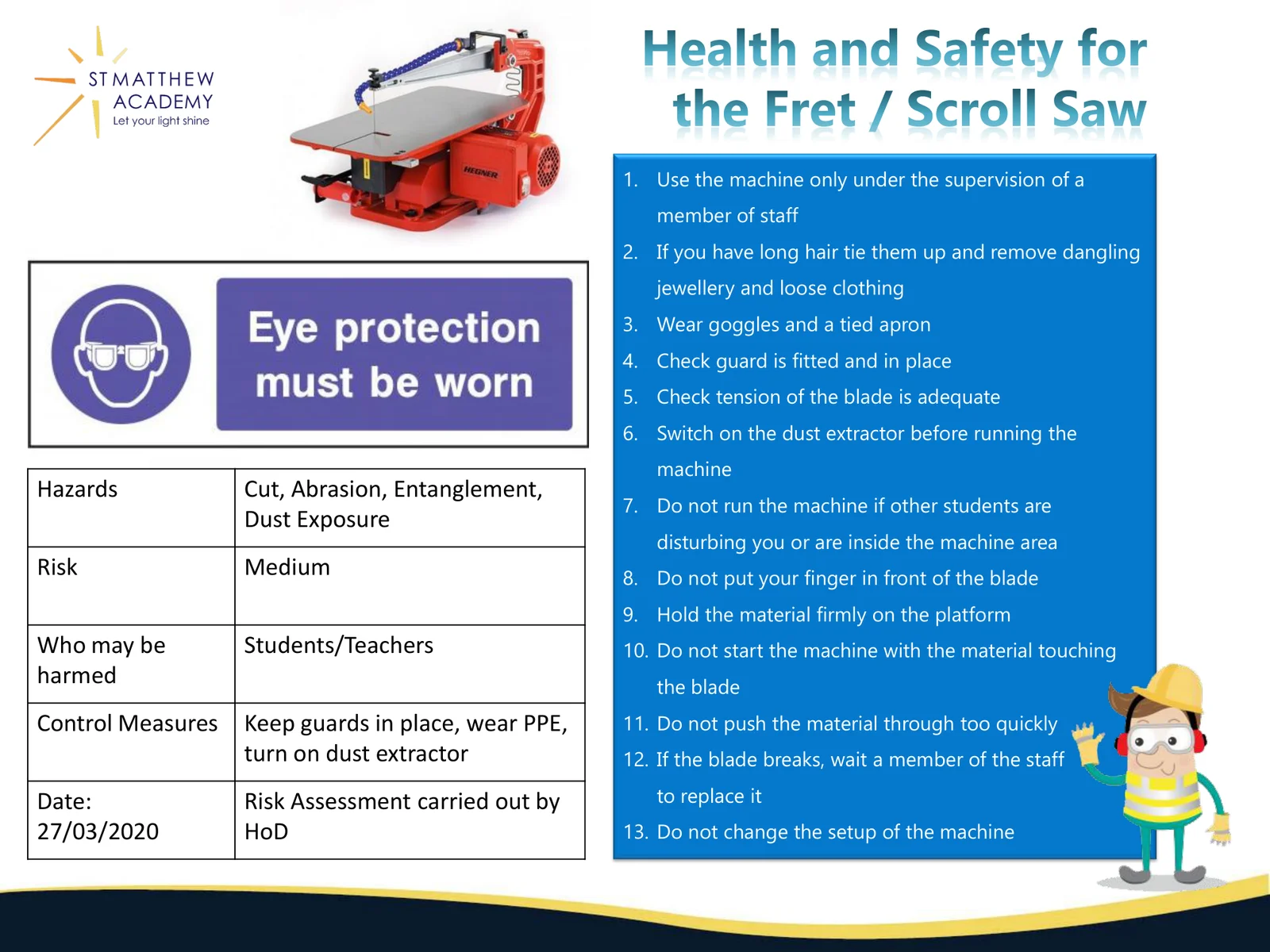
- Machine safety posters: per-machine instruction posters combining PPE signage, an embedded mini risk assessment and step-by-step rules.
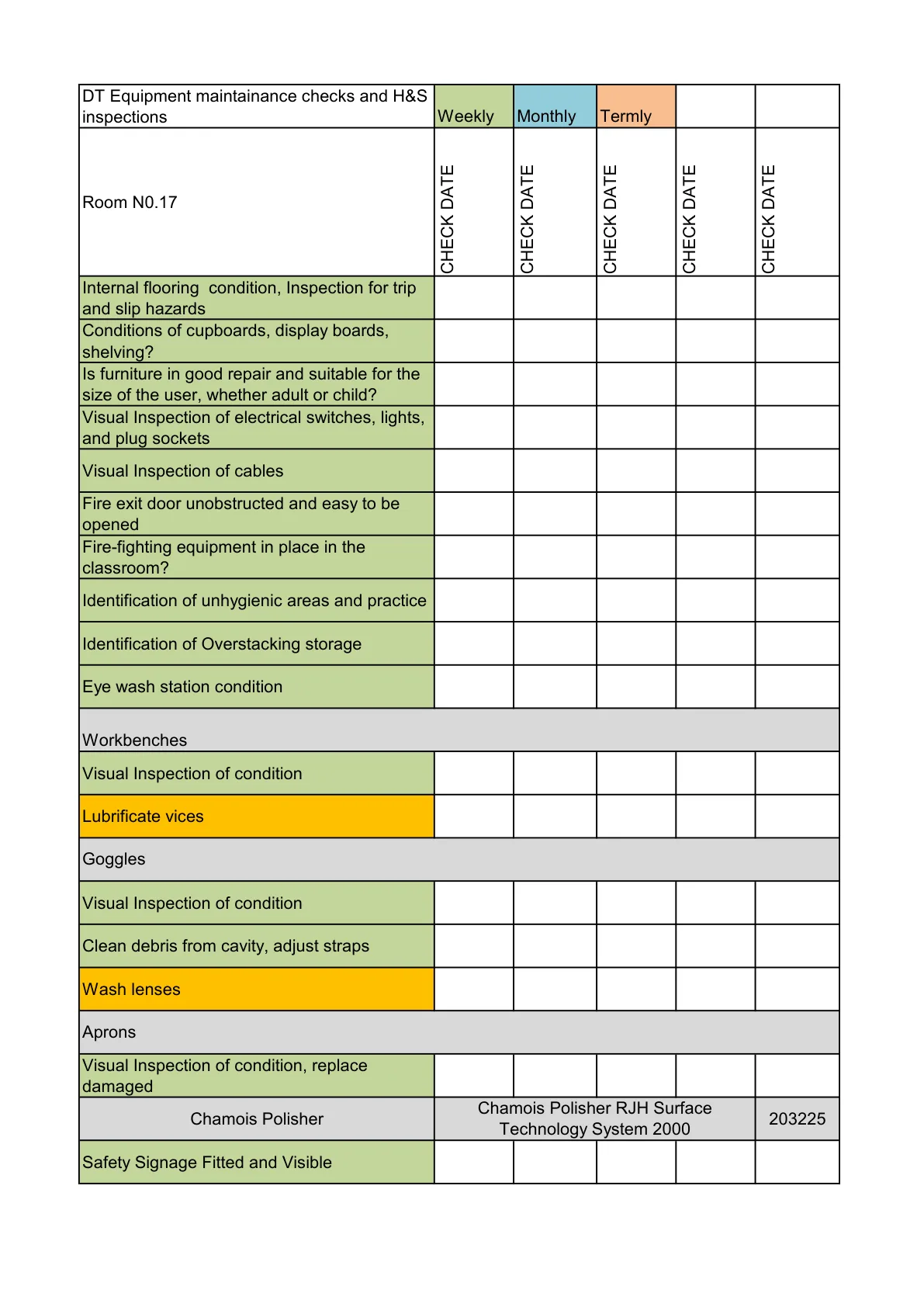
- Inspection schedules: a colour-coded weekly / monthly / termly checklist per room, turning maintenance into a routine rather than a reaction.
- Forms and sign-outs: controlled-item signature forms for dangerous tools issued to students.
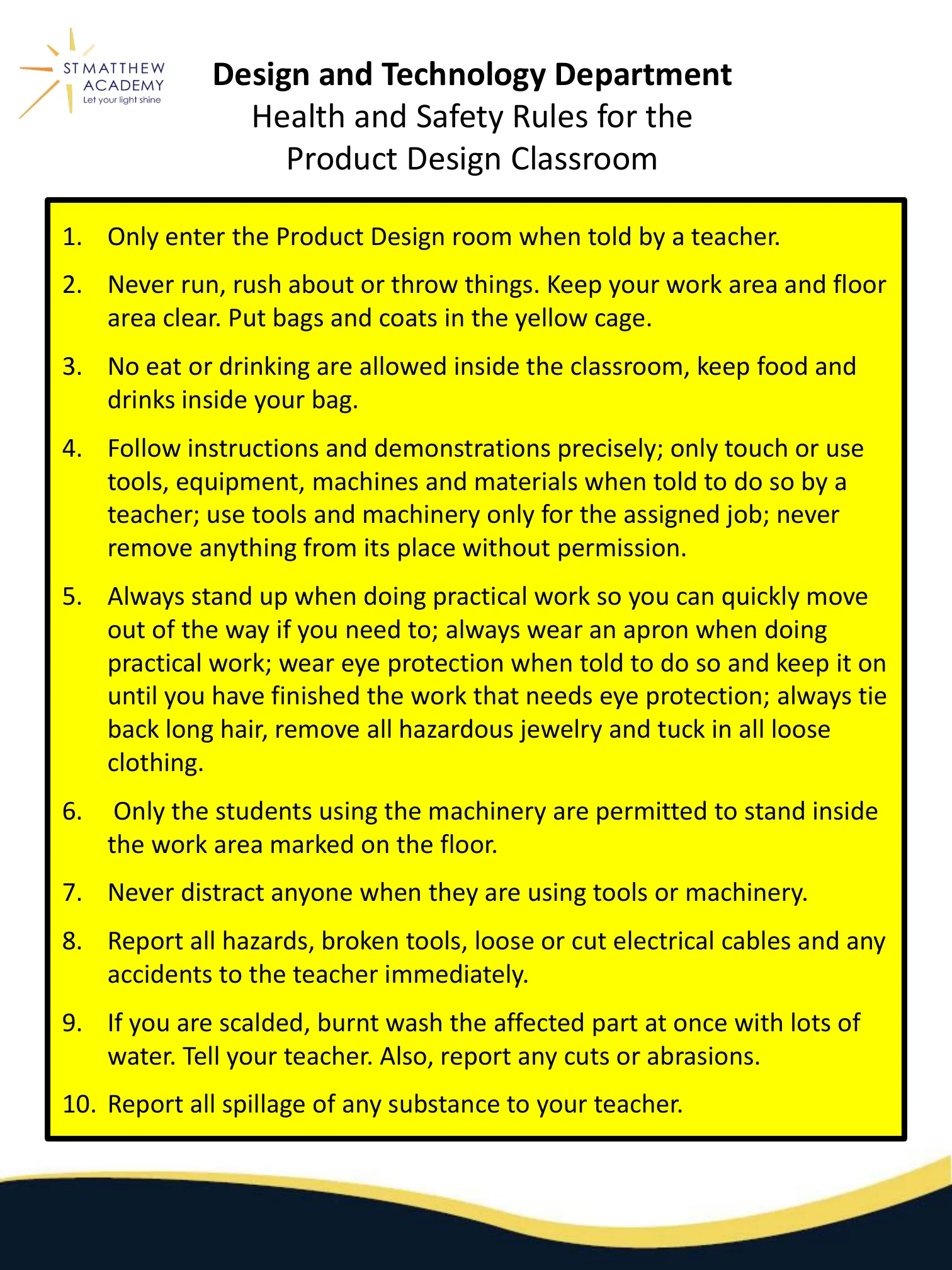
Student-facing rules for the Product Design classroom: the policy’s requirements rewritten at reading age.
Machine-Level Instructions
Each hazardous machine got its own wall poster: mandatory PPE, the embedded risk table (hazards, rating, who may be harmed, control measures, review date) and a numbered rule list a student can actually follow. The poster has to work at a glance, mid-task, with sawdust in the air.
Why It Matters as Communication
The same hazard existed in four formats: a clause in the policy for the HSE inspector, a row in the risk assessment for the head of department, a rule on the poster for the student, and a line on the inspection checklist for the technician. Keeping those four readings consistent, current and findable is the core discipline of technical communication, and it is what this work actually was.